Pelican Close Up – this gorgeous bird just happened to be perched on a railing near some fisherman of course. Lots of folks were taking his photo as did I. When one has a chance to get this close to a wild bird, it is an amazing experience.
New Bird at the Campground – A New Bird at the Campground – Out of nowhere, this stunning rooster appeared, strutting around our RV at this small campground. I thought I heard one crowing at 5 a.m. this morning, and sure enough, there he was.
He’s the most vibrant rooster I’ve ever seen, with feathers that looked incredibly soft and shiny as the sunlight danced across them.
I took lots of photos of him. He did not seem to mind. Probably gets this attention everyday from all the campers coming and going.
Kestrel – American Kestrels occupy habitats ranging from deserts and grasslands to alpine meadows. You’re most likely to see them perching on telephone wires along roadsides, in open country with short vegetation and few trees.
My first sighting of one of these colorful birds.
My shutter speed on the camera wasn’t nearly fast enough to stop motion of this quick bird.
Birds in the Nature Preserve – Just a few of the birds I saw while driving around the nature preserve. A lot of the usual ones like the herons and a few ducks now and than. We are a little late for migration time so there were not as many birds as earlier in the year I am sure.
Most of them were quite far away from where we were standing. I found this photo below interesting as the alligator swam past the Anhinga bird perched on the dead tree.
We did find at one end of the lake a lot of bird feathers. The alligators do eat birds.
Looks like this bird blind got hit by a storm and ripped the roof right off of it. Closed for the season.
Yesterday’s Spoon bills were so far away, I could not get a decent photo of them. But today we were driving along a dirt road and all of a sudden I looked down this small ditch of water and there was one spoonbill.
So I got a better look at one and now I am happy. 🙂
I finally spotted two new bird species and one I’ve been hoping to see for years at the Savannah National Wildlife Refuge!
Whenever I’m traveling, I always pull up Google Maps to check for nearby wildlife areas. In the Southeast, especially along the coast, there are tons of them, thanks to the vast marshlands.
Lately, I’ve been discovering more wildlife refuge areas that let you drive through the landscape. These parks have roads winding through the marshes, giving you deeper access to the area and better chances of spotting wildlife.
Savannah National Wildlife Refuge is one of those special places!
We didn’t spot many bird species as we drove through the area, but I did add two new ones to my list.
My first exciting sighting was a wood stork. They were distant, but I still got a good look with my binoculars.
Then, as we walked down a narrow trail alongside a waterway, a hint of pink caught my eye. Sure enough, there they were!
The spoon bill bird. I finally got to see them. A pink bird. Quite amazing. So different from all the other birds. We are in South Carolina where I finally got to see these. I thought I would have to go to Florida to see them.
Birds – Starting to see some birds other than the blue jays from home.
First the Double Crested Cormorant known for those striking blue eyes. One of these days I would like to get a close up photo of this birds eye. So unique.
The Little Killdeer bird. Always fun to see in the spring time.
But very fast birds, it was very hard to get a shot of this one flying.
This photo below was from last spring, just cute as is. Two goslings.
The white pelican is a majestic marvel of nature, embodying a blend of grace, power, and beauty in its wingspan. As it spreads its wings, the sheer expanse is nothing short of breathtaking. With a wingspan that can reach up to nine feet, the white pelican commands the sky. Its presence is almost regal.
The beauty of the white pelican’s wingspan is remarkable. The contrast of its pristine white feathers against the vast sky accentuates this beauty even more.
As sunlight filters through the feathers, they can shimmer with a soft, iridescent glow. When the pelican soars, it casts a striking silhouette against the horizon. Its wings form a dramatic, sweeping arc. This captures the eye.
Cooper’s Hawk – here it is. A small hawk, but he can move. He was chasing the blue jays in and out of the trees so fast. It was hard to get a photo of it.
He would chase one and then it would escape through the trees. It would wait for one to move and at it again.
The blue jays are just as fast and can zip in and out of the tree branches as well.
I never did see the hawk catch one bird. I did see the blue jays chase it off many times. But it would come back a few days later and try again.
Nature taking its course. Oh, and when the blue jays are warning everyone around that the hawk is here. All the bird species take cover. The chickadees stay hidden until the coast is clear.
Little Known Fact about the Blue Jays, or maybe others do know this about this colorful bird.
They work together when danger is close by. I have heard others say that blue jays are a pest. Mainly because they kind of hog the bird feeders. Well, they do that, yes. I have seen them, but other birds can be pushy as well, like the grackles and morning doves.
I saw for the first time a Coopers Hawk hanging around my bird feeders this year. It just doesn’t seem right that a bird will eat another bird. Coopers hawks do just that.
We knew when the hawk was in the area because all the blue jays give out warning calls. All of a sudden the hawk is flying after one, as the blue jay gets away. All the blue jays start chasing the hawk.
I will have photos of that tomorrow. I was pretty impressed how these blue jays stuck together to try and chase it off. More tomorrow.
There are 4 species of nuthatches found in North America. They are the red-breasted nuthatch, the white-breasted nuthatch, the brown-headed nuthatch, and the pygmy nuthatch.

While they have distinct physical features, these tree-climbing birds share habitat, food, nesting, and foraging behaviors in common.

I photographed two of them this fall here at my place.  The white breasted and the red one.
Plus I included some more Chickadee photos. I can’t resist taking their photos when they practically come right up to me.
5 Ds of Dodge Ball – Dodge, duck, dip, dive and dodge
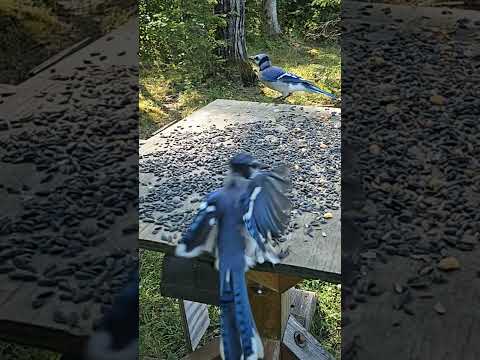
These blue jays have the moves of the old Dodge Ball Game. Do you remember that game. I do, we played it in gym class. I don’t think they play that one anymore.
I just bought that old movie Dodge Ball, it is a classic for me.
Go Pro Photos. I was experimenting with the go pro camera at my bird feeding table last week. I normally just use the camera for videos. But I thought I would try the photo menus and see what happens.
It is not bad if the subject isn’t moving to much. Mainly because you can not control the shutter speed when you have the camera running on auto.
There is a little blur with wing movement, which I knew would happen. A fun little experiment though.
Discovering the New Bird Sanctuary near Paducah KN. I just looked at the map and saw a green area not far from us. So we took a drive to see what it was.
This area had a nice size man made lake with a road that you can drive all around it. Plenty of habitat for a lot of birds and people out fishing on the lake as well.
We discovered this new bird walking along the shore line.
Dozens of Egrets in the trees and on land. I will definitely be visiting this park again to see more birds.
Just One Shot is all I get of these sand hill cranes. They landed in the field next to our place. You can hear them easily in the mornings, as they make their bird calls.
This particular morning they flew right over my head and landed the next field over. I went out there to get a photo of them and only snapped this one before they took off. They were quite far away as well.
I never realized they have red eyes like the black swans until I looked at this photo.
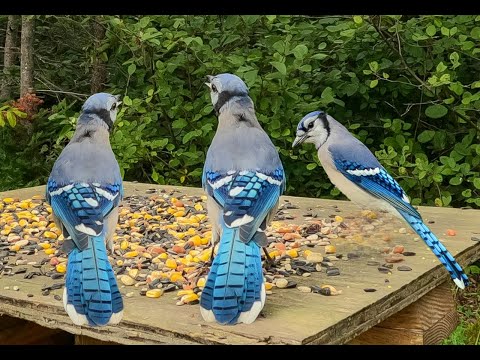
Blue Top Hat. Molting seems to be done with the blue jays. They have their crown of blue feathers back. There are always plenty of them to photograph this time of year.
A Dazzling Jewel – The male cardinal’s brilliant red plumage is nothing short of breathtaking, resembling a vivid splash of crimson against the soft green foliage backdrop. His striking color radiates with an almost fiery intensity, making him a dazzling jewel amidst the muted tones of his surroundings.